Oh, Typing
I once read something to the effect that a poem proposes a way of being. I can't recall who wrote that, but the idea sticks with me. If you were close to Monica, you probably knew her as quick to propose ways of being. If you were very close to Monica, you know she could sometimes be quicker than strictly necessary about it.
A personality test she and I took years ago revealed that she was an advocate, which is a friendly name for the rare personality type INFJ (Introverted, Intuitive, Feeling, Judging). A description of the type goes something like this: Advocates are idealistic and principled, guided by strong inner values and a sense of what is right. They are intuitive, often unusually good at reading people’s emotions and hidden needs. They are passionate, altruistic, and drawn toward helping others. They also tend to prefer structure and planning over spontaneity, sometimes organizing not only their own lives, but the lives of those around them.
Advocates hold themselves to incredibly high standards, and sometimes project those expectations onto partners, friends, and colleagues. That part made me laugh, because yes, and I’m a better person for it.
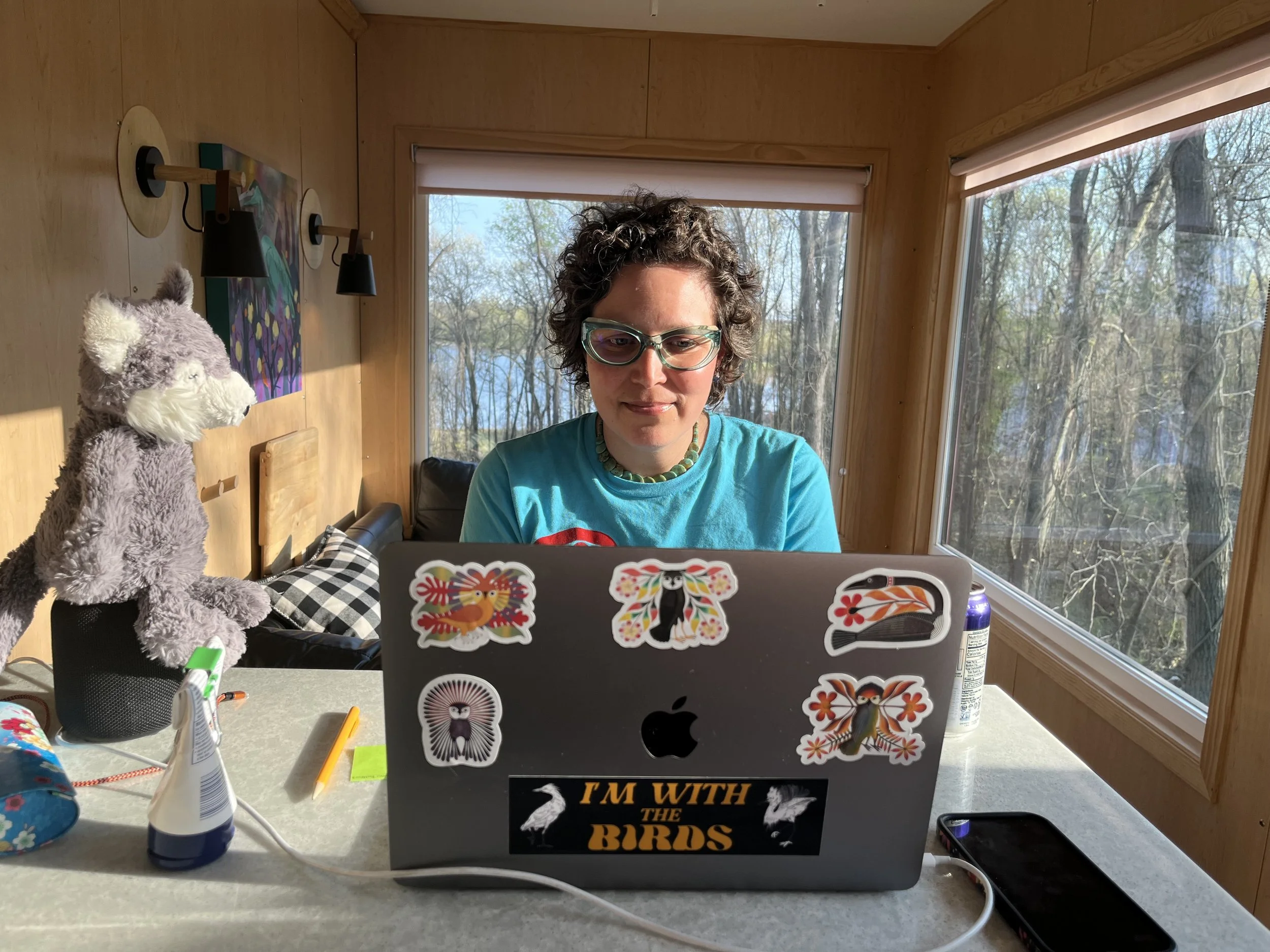
Monica, typing.
This is all spot on for Monica. If you’re wondering, the test said I’m a toss-up between advocate and adventurer. Monica said she knew I’d be an adventurer, but she was thrilled, maybe even relieved, to discover there’s some advocate in the Todd mix too.
Lately, I’ve been thinking about Monica’s rare personality in relation to poetry. Advocates, apparently, make up only about one or two percent of people. Does it ring true to you that the purpose of a poem, at least in part, is to propose a way of being? Does poetry come more naturally to someone like Monica — someone so committed to imagining better, truer ways to live?
Monica drafted poems in her head, and when nearly polished, she’d write them down somewhere. I remember going to the Apple Store with her. The salesperson wanted to match her to a laptop with the right amount of computing power and storage, so she asked Monica what she’d do with the laptop. Without hesitation, Monica answered, “Oh, typing.”
I guess a lot of poets write in their heads, but if you’re writing nearly all the time in your head, like Monica, there’s no clear line between the poem and reality. Reality is the poem. And if that’s how it works, and you’re really good at poetry, why wouldn’t you want to help your friends and family workshop their lives? Monica would, of course, object to that word choice. She was highly skeptical of most traditional poetry workshops. Some of you may be nodding.
There’s one question I’ll answer myself. Since we will always have Monica’s poems, we will always have Monica, right?
I’m right.
I know some of you have answers to the other questions. Respond in verse if that comes easiest. Thanks for listening.